On February 26, Black Freedom Fund hosted a webinar featuring leaders working on the ground in Minnesota to discuss the impacts of recent federal immigration enforcement operations, what they mean for movements nationwide, and the importance of investing in local leaders defending democracy.
Over the past several months, Minnesota has been at the center of a historic movement resisting an unprecedented federal immigration enforcement operation that has resulted in thousands of arrests, widespread intimidation and disruption, and the fatal shootings of Minnesota residents Renée Good and Alex Pretti.
In the face of fear and repression, local organizers, journalists, and community leaders mobilized to defend their neighbors, document what was happening on the ground, and ensure that these events did not unfold without accountability.
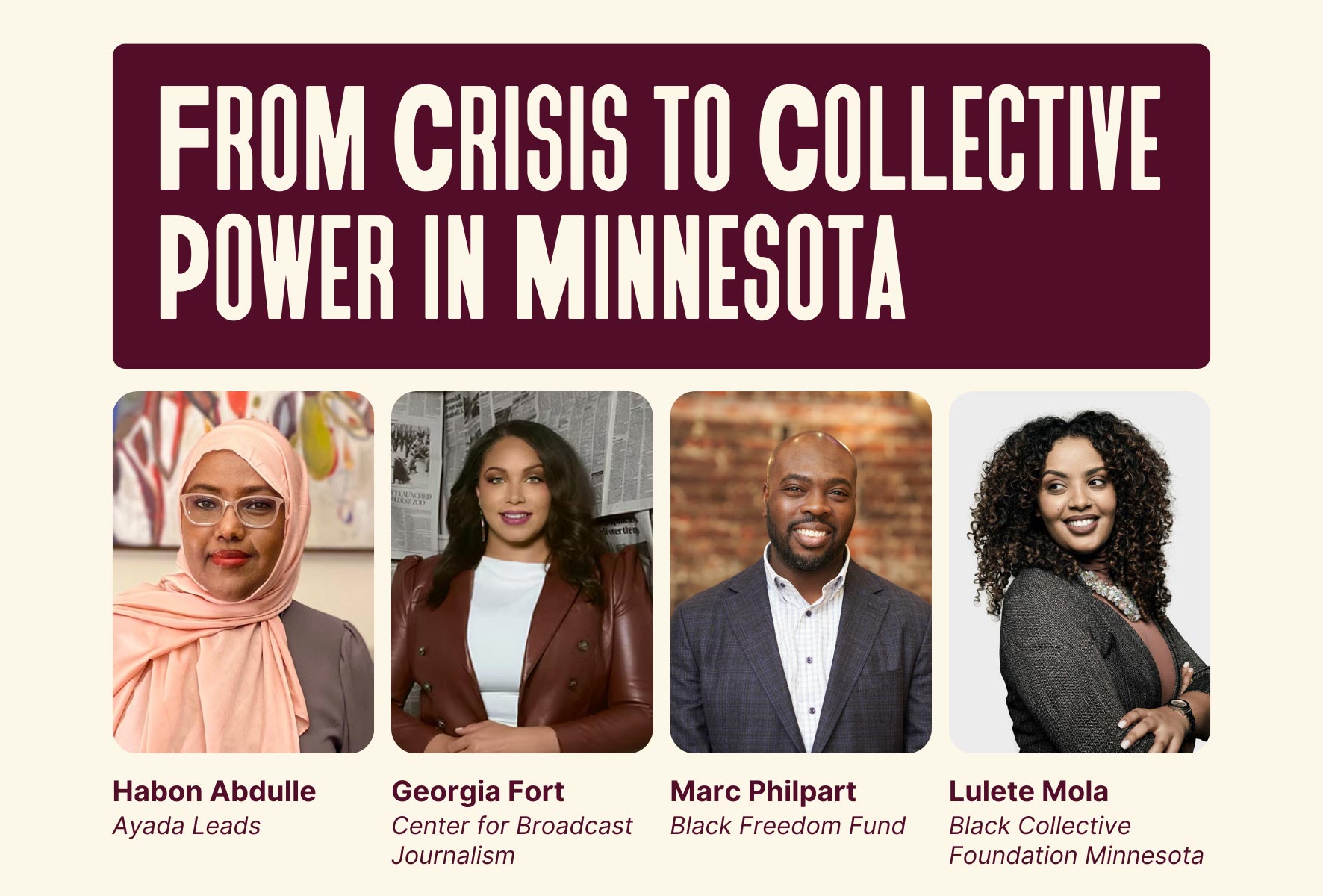
The conversation brought together:
- Lulete Mola, President and Co-Founder of the Black Collective Foundation Minnesota
- Dr. Habon Abdulle, Executive Director of Ayada Leads
- Georgia Fort, Emmy Award–winning journalist and Founder of the Center for Broadcast Journalism
- Marc Philpart, President and CEO of Black Freedom Fund
Together, they shared insights from their work supporting Black immigrant communities, documenting events unfolding on the ground, and building the organizing infrastructure needed to protect communities and sustain movements over the long term.
Black Freedom Fund President and CEO Marc Philpart opened the conversation by grounding participants in the broader context of what has been happening in Minnesota in recent months.
Thousands of federal immigration agents have been deployed across communities in the state, entering neighborhoods, schools, and workplaces. Speakers described how these actions have disrupted families and communities, created fear among residents, and intensified broader concerns about civil liberties and democracy.
At the same time, journalists covering the situation face growing pressure, arrests, and intimidation, highlighting the importance of protecting both the right to protest and the freedom of the press.
Organizing at the intersection of movements
Panelists emphasized that what is happening in Minnesota cannot be understood through a single-issue lens.
Dr. Habon Abdulle explained that immigration enforcement is deeply connected to broader issues of race, belonging, and democracy. Her organization, Ayada Leads, works with African diaspora women and families to build civic leadership and community power.
Ahead of the 2024 election, community organizations in Minnesota began organizing to prepare for potential policy changes that could impact immigrant communities. Those early conversations led to the formation of the Immigrant Defense Network, a coalition that trained community members to know their rights, document enforcement activity, and support neighbors in moments of crisis. When enforcement actions intensified, those networks allowed communities to respond quickly.
The role of narrative and independent media
Journalist Georgia Fort, who recently made national news after being arrested for her coverage of a January 2026 protest at a church, spoke about the critical role independent media has played in documenting what is happening across Minnesota.
National media coverage has often lacked the context necessary to fully understand the scale of the federal operation. Fort emphasized that community-centered journalism helps ensure that the experiences of those directly affected are documented and shared.
Through the Center for Broadcast Journalism, Fort is working to build a new generation of journalists who can tell these stories and expand representation in media.
Sustaining the work beyond moments of crisis
For Lulete Mola, the conversation also highlighted the gap between moments of national attention and the long-term work that follows.
Minnesota became a global focal point for racial justice after the murder of George Floyd in 2020. Yet many of the organizations doing the work on the ground have since faced declining support, even as new challenges emerge.
Speakers emphasized that organizing infrastructure, leadership development, community networks, and independent media all require sustained investment. Local organizers are often the ones creating the conditions that shape national movements, but without long-term support, their ability to continue that work is limited.
Learn more and support the organizations
Organizations on the ground in Minnesota are doing essential work to protect communities and defend democracy. Black Freedom Fund is proud to have invested in the Black Collective Foundation Minnesota to support the local organizing and community infrastructure that makes this work possible. Philanthropy has a critical role to play in ensuring that local leaders have the resources they need to respond in moments like this. We encourage others to join Black Freedom Fund in resourcing organizations like the Black Collective Foundation Minnesota, Center for Broadcast Journalism, and Ayada Leads as an essential and integral part of the movement’s infrastructure.
Learn more about:
- Black Collective Foundation Minnesota – minnesotablackcollectivefoundation.org
- Ayada Leads – ayadaleads.org
- Georgia Fort / Center for Broadcast Journalism – georgiafort.com
- Center for Broadcast Journalism – centerforbroadcastjournalism.org
Share